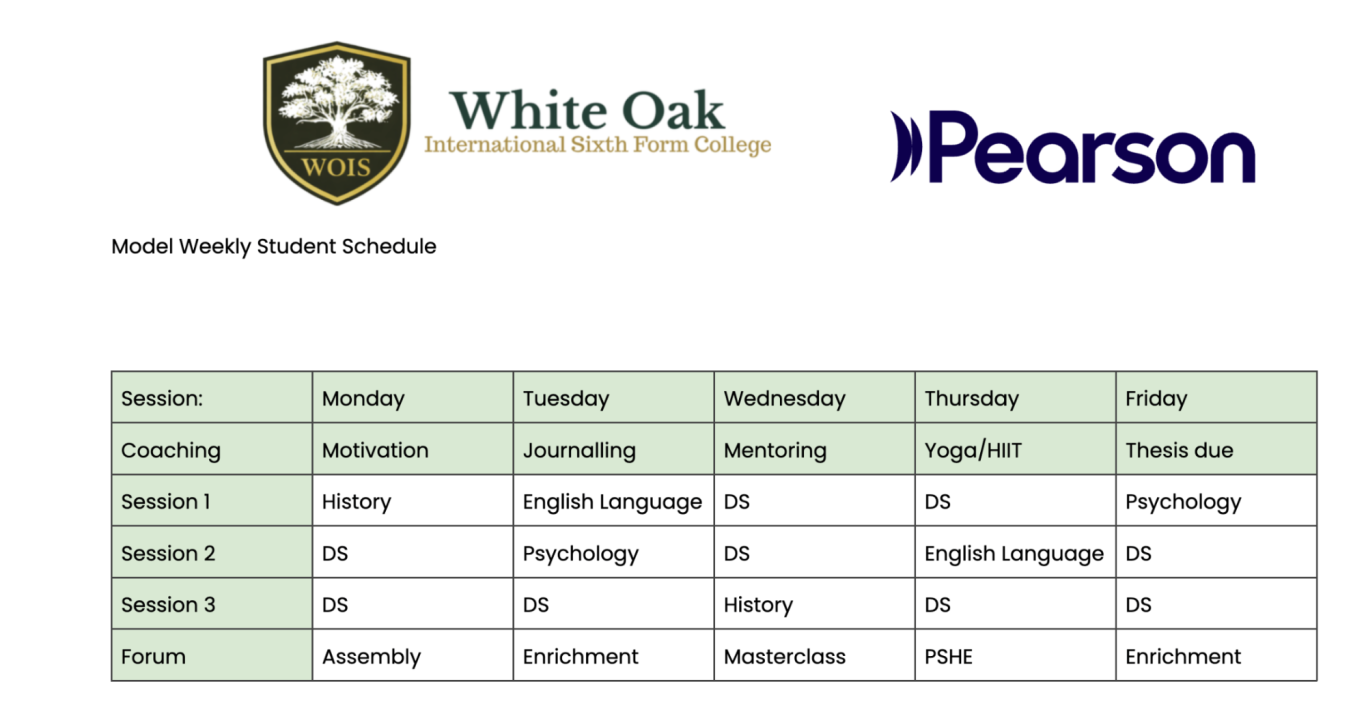
Journaling and Reflective Writing
Journaling at White Oak is approached as a tool for clarity of thought, self-reflection, and intellectual development. In an increasingly fast and distracted world, the ability to pause, observe, organise one’s thinking, and reflect critically is becoming an important academic and personal skill.
Students explore different forms of reflective and analytical writing — from structured intellectual journals and observation notes to reflective prompts, creative thought exercises, and personal academic reflection. The programme encourages students to develop a stronger awareness of their own thinking, learning patterns, goals, and decision-making processes.
Sessions may include:
- Reflective writing and guided prompts
- Intellectual and philosophical journaling
- Observation and mindfulness-based writing
- Goal setting and personal development reflection
- Academic reflection and learning analysis
- Creative and exploratory writing exercises
The programme supports focus, emotional resilience, independent thinking, and deeper intellectual self-awareness — skills that are valuable both academically and beyond school.
WHO IT SUITS
Students interested in writing, psychology, philosophy, literature, personal development, creativity, mindfulness, or those seeking a quieter space for reflection, clarity, and thoughtful self-expression.

The Practice of Reflection
Developing clarity, independent thought, and intellectual self-awareness.
Reflective writing has long been used within universities, research environments, and professional training programmes as a tool for deeper learning, critical thinking, and intellectual development. Research in higher education increasingly shows that reflective journaling can strengthen self-directed learning, metacognition, critical analysis, and long-term academic engagement.
At White Oak, journaling is approached not as a diary exercise, but as part of the wider discipline of learning how to think clearly, reflect critically, and engage more consciously with one’s own learning process. Students are encouraged to develop habits of reflection that support academic maturity, focus, organisation, and independent intellectual growth.
Reflective practice can help students:
- organise and clarify complex ideas
- recognise patterns in their thinking and learning
- develop stronger critical thinking and self-awareness
- engage more deeply with academic material
- strengthen focus, reflection, and intellectual independence
- approach challenges with greater perspective and intentionality
Sessions may include:
- Reflective and analytical writing
- Observation-based journaling
- Intellectual and philosophical reflection
- Academic self-review and study reflection
- Goal and habit reflection
- Writing for clarity, focus, and thought organisation
In many educational environments, students are encouraged to move constantly from task to task without developing the space to reflect deeply. White Oak views reflective practice as part of intellectual formation itself — helping students become not only academically capable, but thoughtful, self-aware, and able to engage with ideas with greater clarity and perspective. Research also suggests that reflective writing supports deeper conceptual understanding, stronger critical thinking skills, and more engaged learning over time.
Journaling and Our Curiculum: